How to tie the Clove hitch
The clove hitch fastens a rope to a post or rail with two turns and a crossing strand. It is easy to adjust, but can slip or bind under load.
- Type
- Hitches
- Difficulty
- Easy
- ABOK number
- #1245
- Best for
- General rope work, Camping
Two turns held by a diagonal crossing make this a useful adjustable hitch.[2]
On a post it can slip or jam. Climbing uses require a complete, properly taught system.[1][4]
Step-by-step: tying the Clove hitch
-
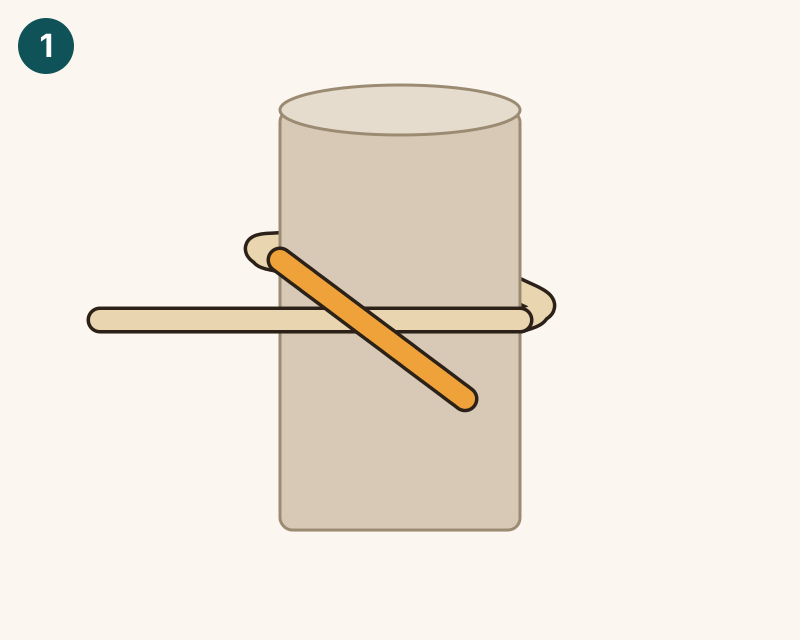
Step 1: Make the first turn
Pass the working end behind the post from right to left. Bring it around the left edge and cross over the standing part, making one diagonal toward the lower right.
-
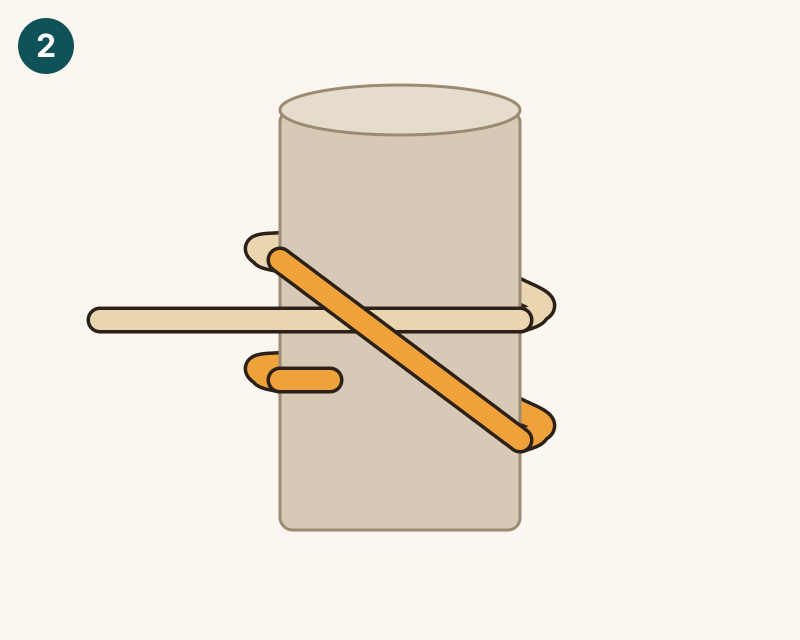
Step 2: Go around a second time
Continue the same diagonal around the right edge and behind the post again, in the same direction. Bring the working end out at the lower left, beside the first turn.
-
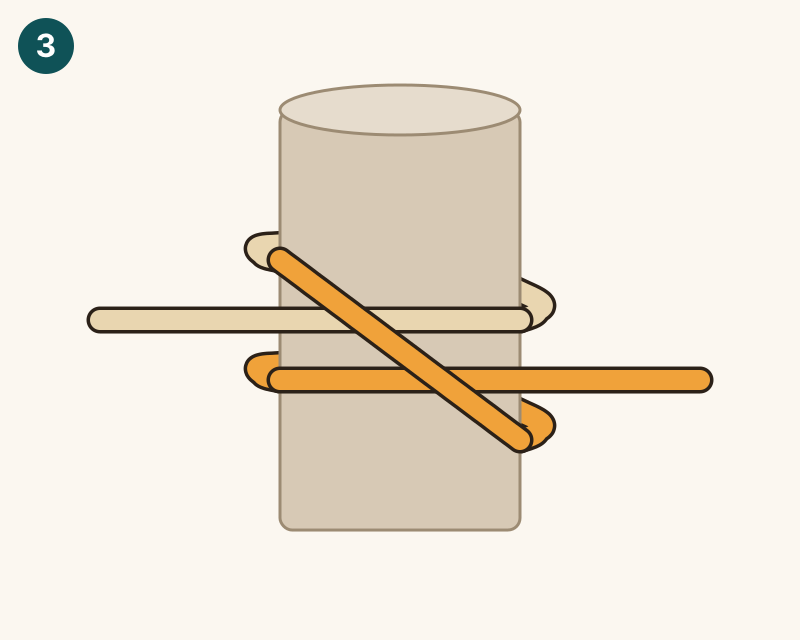
Step 3: Tuck beneath the diagonal
Pass the working end horizontally across the front, under the single diagonal, and out to the right. The standing part exits left beneath the same diagonal.
-
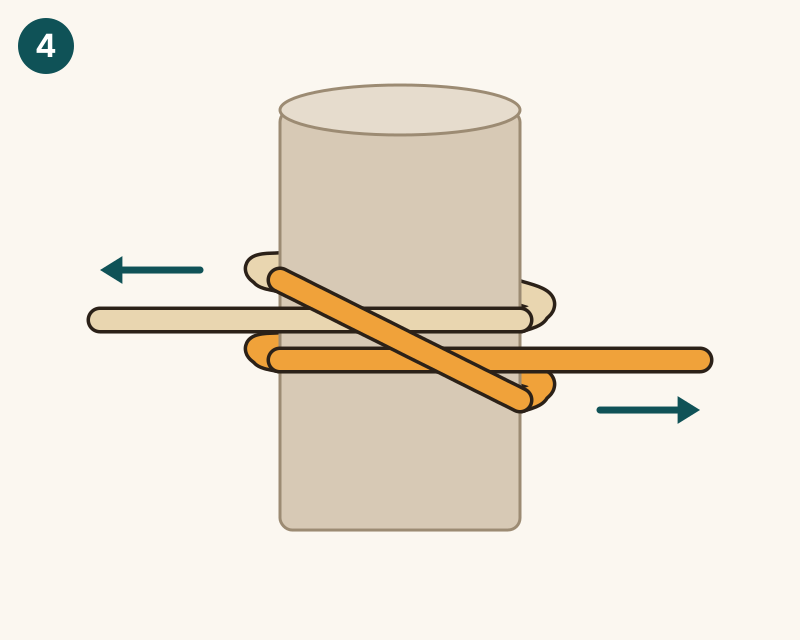
Step 4: Dress and tighten
Pull the standing part to the left and the working end to the right. Snug both turns against the post. Check for one diagonal across the front, with both exiting strands beneath it.
What the Clove hitch is used for
Strengths and weaknesses
Tips and common mistakes
Tips
- Dress both turns against the post before loading.[3]
- For a fender line, add two half hitches around the standing part after adjustment.[1]
Common mistakes
Variations
- Clove hitch using loops — Forms the same hitch without threading an end around the object.[1]
Related knots
Frequently asked questions
What is it used for?
Temporary attachments, lashings and adjustable connections within suitable systems.[2]
Can a clove hitch slip?
Yes, especially if tension is not maintained or the object rotates.[3]
Can it also jam?
Yes. Ease of adjustment does not guarantee easy release after loading.[1]
Can it be tied without a free end?
Yes. The stacked-loop method forms it in the middle of a rope and places it over an accessible post end.[1]
Is it used in climbing?
Yes. Petzl describes it for adjustment within climbing anchor systems; learn those systems in person.[4]
Sources
- Clove hitch — Animated Knots by Grog — tying sequence, uses and cautions
- Clove hitch — Wikipedia — structure, limitations and Ashley numbering
- Clove hitch — NetKnots — instructions and checks
- Building a belay anchor and belaying on a bolted multi-pitch route — Petzl — adjustable clove hitches within climbing anchor systems
Last reviewed: