How to tie the Figure-eight knot
The figure-eight is a stopper tied in a single rope end. It makes the end bulkier so it cannot easily run through an opening, and is usually easier to undo than an overhand stopper.
- Type
- Stopper knots
- Difficulty
- Easy
- ABOK number
- #570
- Also known as
- Figure-of-eight knot, Flemish knot, Savoy knot
- Best for
- Sailing and boating, General rope work
A single figure-eight is the starting point for several other knots, including the figure-eight follow-through. The single-strand stopper shown here does not make a fixed attachment loop.[3]
It is useful for temporary stopping jobs in running rigging, but can come undone. Larger, more stable stopper knots may suit jobs where the rope will be shaken or left slack.[1]
Step-by-step: tying the Figure-eight knot
-
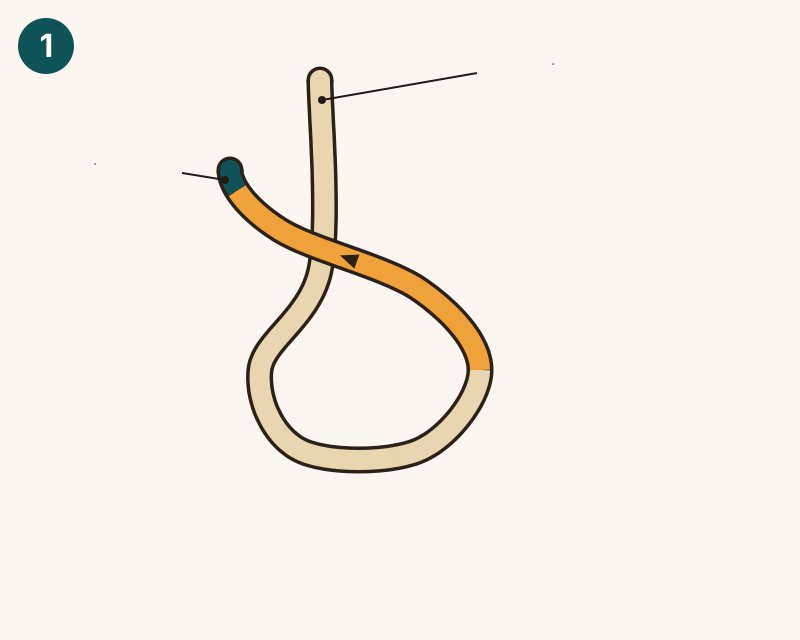
Step 1: Cross the end over the standing part
Make a loop near the end of the rope. Lay the working end over the standing part at the crossing. Leave enough tail to take another turn and tuck it through the loop.
-
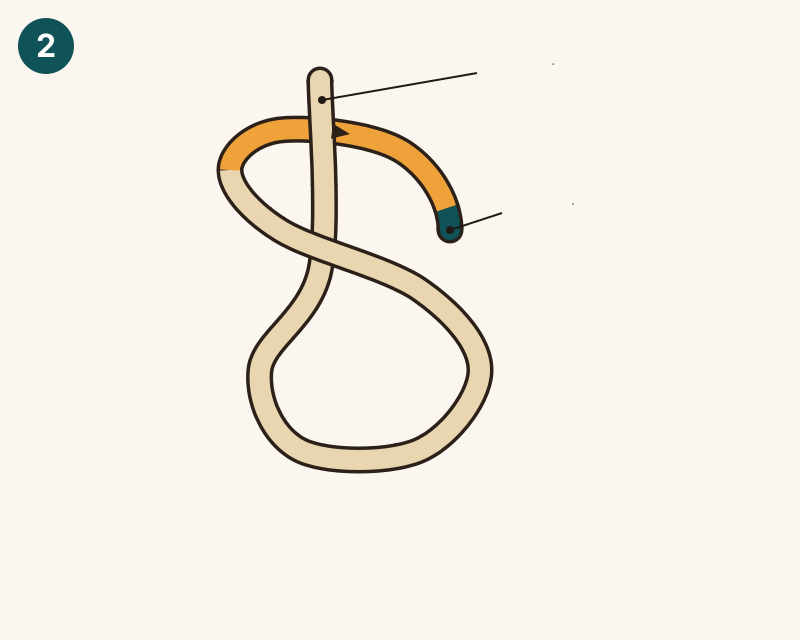
Step 2: Go behind the standing part
Take the end upward and behind the standing part, then bring it around to the other side. Keep the first loop open.
-
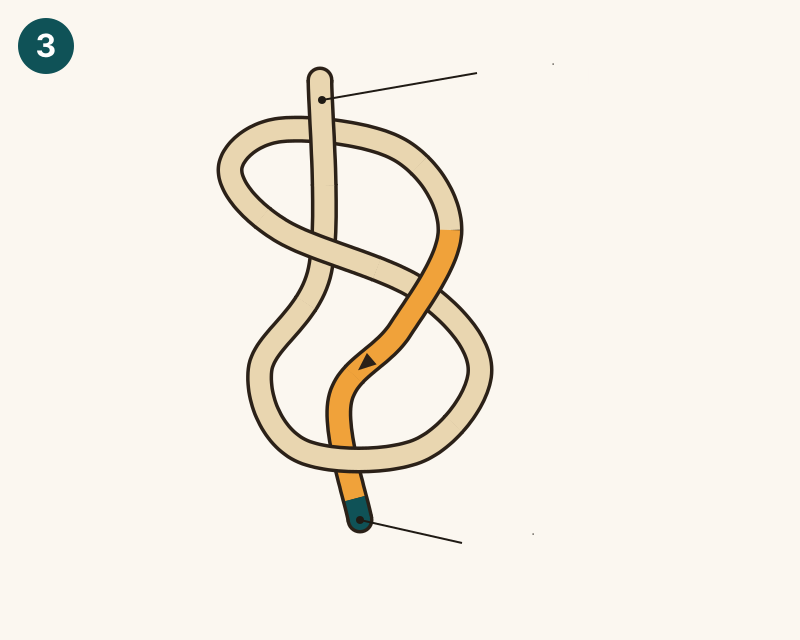
Step 3: Tuck through the first loop
Bring the end down across the front of the rope and feed it down through the original loop. It enters over the near upper edge and leaves underneath the lower edge.
-
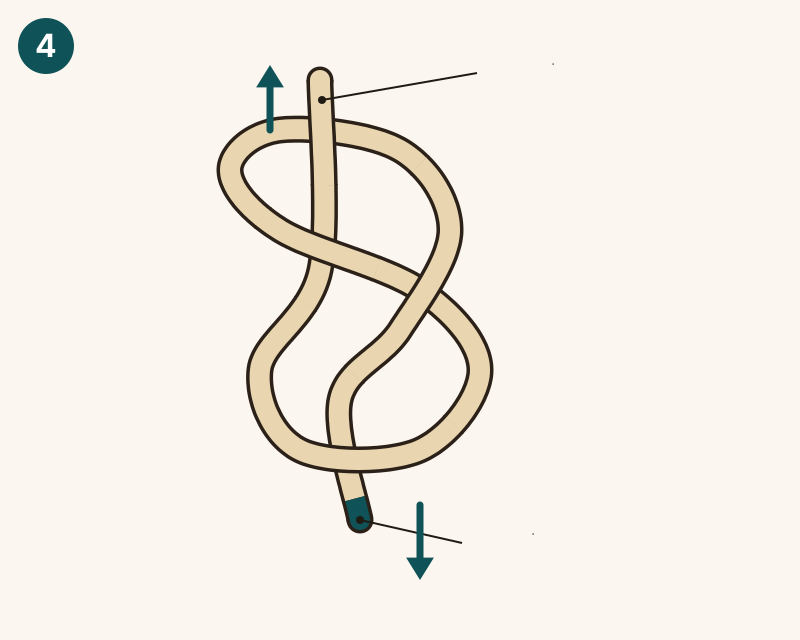
Step 4: Dress and tighten
Draw the standing part and tail apart to close the knot. Keep the turns orderly and leave a visible tail. The diagram keeps the knot open enough to inspect its path.
What the Figure-eight knot is used for
Strengths and weaknesses
Tips and common mistakes
Tips
- Keep the first loop open until the end is tucked.
- Trace the entire rope path before tightening.
Common mistakes
- Stopping after the first crossing. The end still needs to go around the standing part and back through the loop.
- Tucking a doubled bight instead of the end. That changes the structure.
- Leaving too little tail or an unset knot. Check again before use.
Variations
- Stevedore knot — Adds another turn before the final tuck.[2]
- Figure-eight follow-through — Retraces the stopper to make a fixed loop.[3]
Related knots
Frequently asked questions
Is this the same as the climbing figure-eight?
It is the single-strand stopper. The follow-through retraces it to make a loop for attachment.[3]
What is it used for?
Temporary stopper jobs, especially keeping a line from running through a block.[1]
Can it come undone?
Yes. Its easy release is useful, but it can also fall apart and need retying.[1]
Is it easier to untie than an overhand?
Usually. It is less prone to jamming than a simple overhand stopper.[2]
Sources
- Figure 8 Knot — Animated Knots by Grog — stopper uses, tying sequence, ABOK #570 and limitations
- Figure-eight knot — Wikipedia — stopper form and stevedore variation
- Figure Eight — NetKnots — distinction between the single stopper and retraced loop
Last reviewed: