How to tie the Improved clinch knot
The improved clinch attaches monofilament fishing line to a hook, lure or swivel. Five wraps and a final extra tuck make this familiar terminal knot.
- Type
- Fishing knots
- Difficulty
- Easy
- Best for
- Fishing
The extra tuck distinguishes this knot from the plain clinch. Heavy line makes it harder to tie, and NetKnots advises against using it with braid.[2]
Step-by-step: tying the Improved clinch knot
-
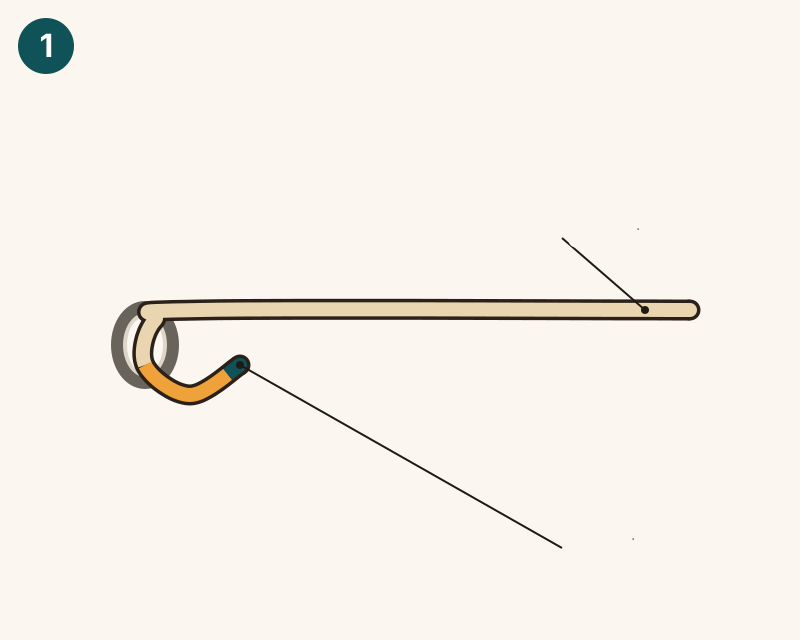
Step 1: Thread the eye
Pass the working end through the eye, leaving room for five wraps.
-
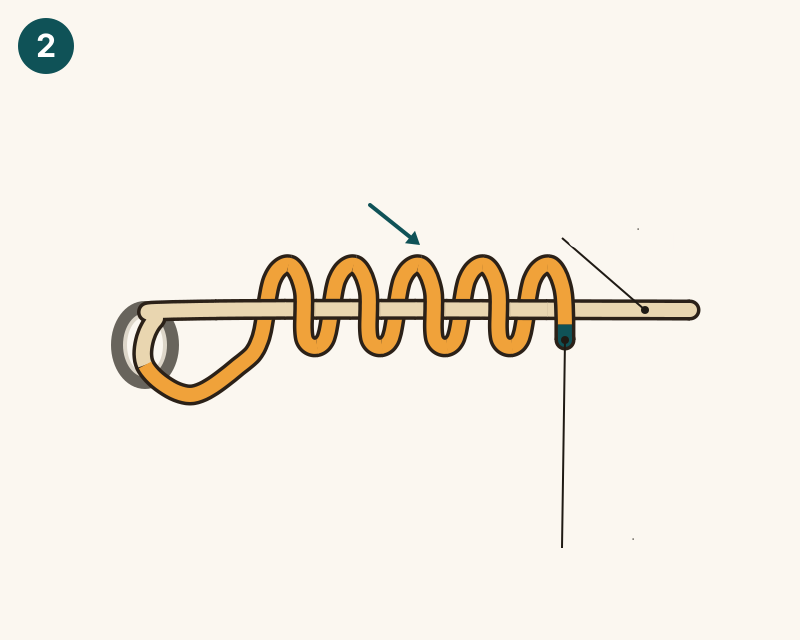
Step 2: Make five wraps
Wind the working end five times around the standing part, keeping a neat spiral.
-
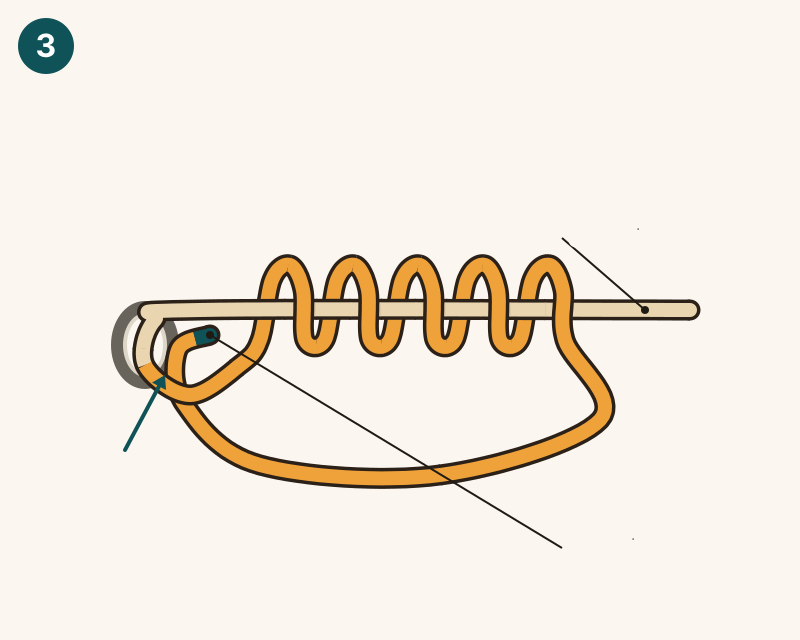
Step 3: Return through the small loop
Bring the end back through the small opening immediately beside the eye. Leave the new large loop open.
-
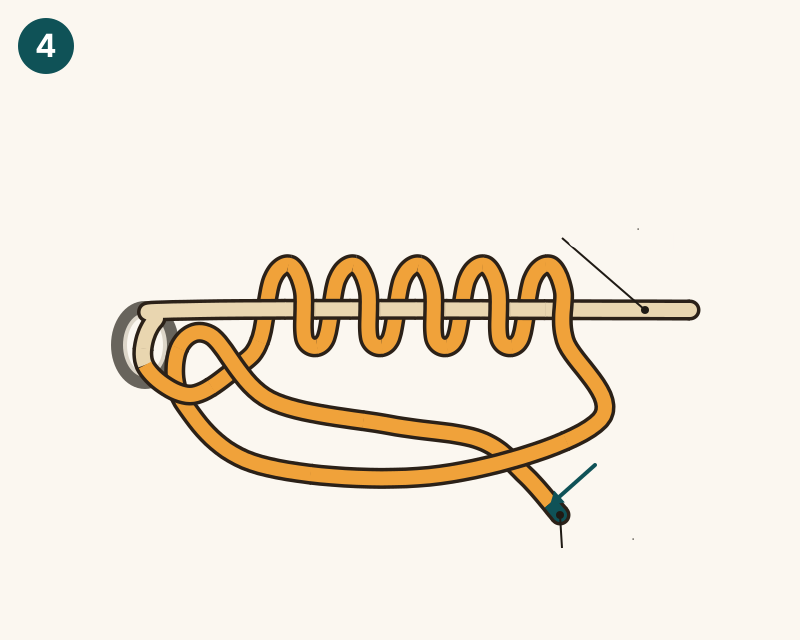
Step 4: Make the extra tuck
Pass the end through the large loop you just made. Keep the coils in order.
-
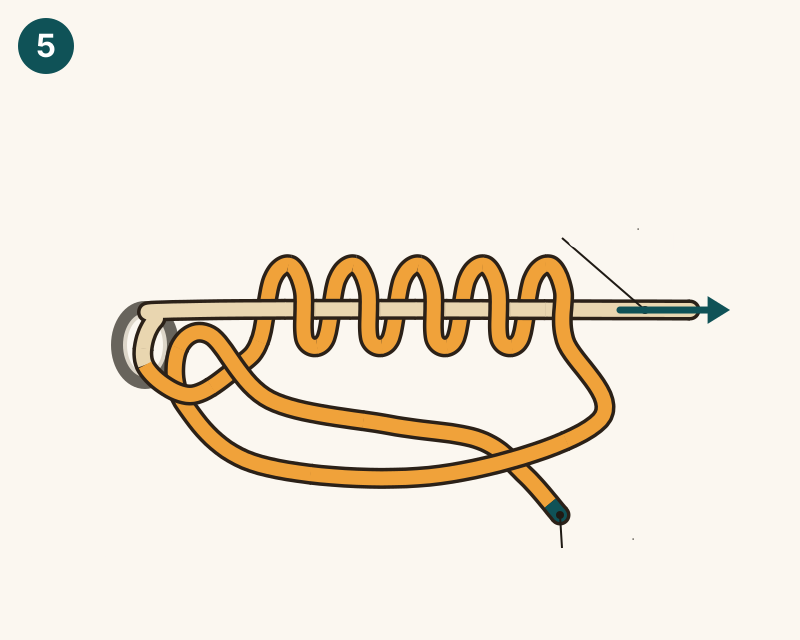
Step 5: Wet and seat
Moisten the knot, draw the coils together and pull the standing line to seat them against the eye. Test before trimming. The drawings keep the knot open: the coils rearrange as they tighten.[1]
What the Improved clinch knot is used for
- Attaching monofilament to terminal tackle.[2]
Strengths and weaknesses
Tips and common mistakes
Tips
- Hold the wraps while winding.[1]
Common mistakes
- Missing the extra tuck. That leaves a plain clinch.
- Overlapping coils. Keep the turns side by side.
Variations
- Clinch knot — Omits the final tuck.
Related knots
- Palomar knot — An alternative for braid.
- Uni knot — Another terminal connection.
Frequently asked questions
What is it used for?
Connecting line to a hook, lure or swivel.[1]
How many wraps?
About five; heavier line may need fewer.[1]
Can I use braid?
NetKnots recommends another knot for braid.[2]
Why does the tightened knot look different?
The twists redistribute as the coils seat, bringing the tag near the eye.[1]
Sources
- Improved Clinch Knot — Animated Knots — tying, seating and uses
- Improved Clinch Knot — NetKnots — material limitations and instructions
Last reviewed: