How to tie the Palomar knot
The Palomar attaches fishing line to a hook with a doubled line, an overhand knot and a loop passed over the tackle. It is a useful choice for braid.
- Type
- Fishing knots
- Difficulty
- Easy
- Best for
- Fishing
A short tying sequence makes the Palomar straightforward to learn. The tackle must fit through the doubled loop.[1]
Step-by-step: tying the Palomar knot
-
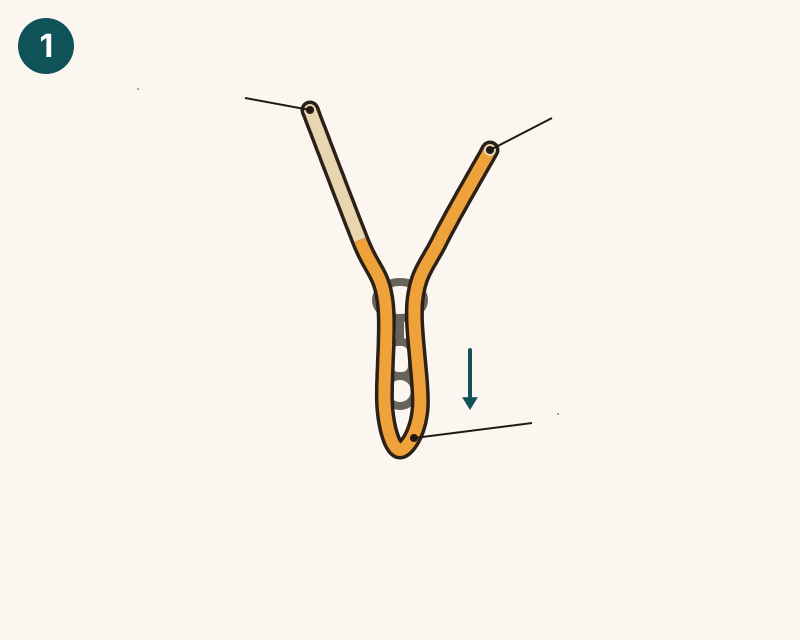
Step 1: Double the line through the eye
Double about 15 cm of line into a bight. Pass the bight through the swivel eye, leaving the standing part and tag end on the other side.
-
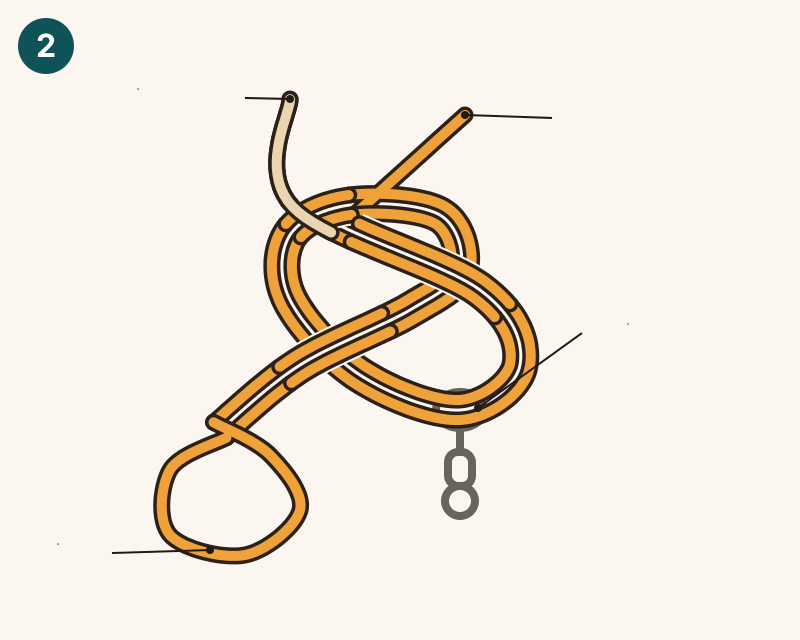
Step 2: Tie a loose overhand
Tie a loose overhand knot with the doubled line, treating the bight as one end. Leave the swivel hanging from the bottom of the knot and keep the end of the bight free.
-
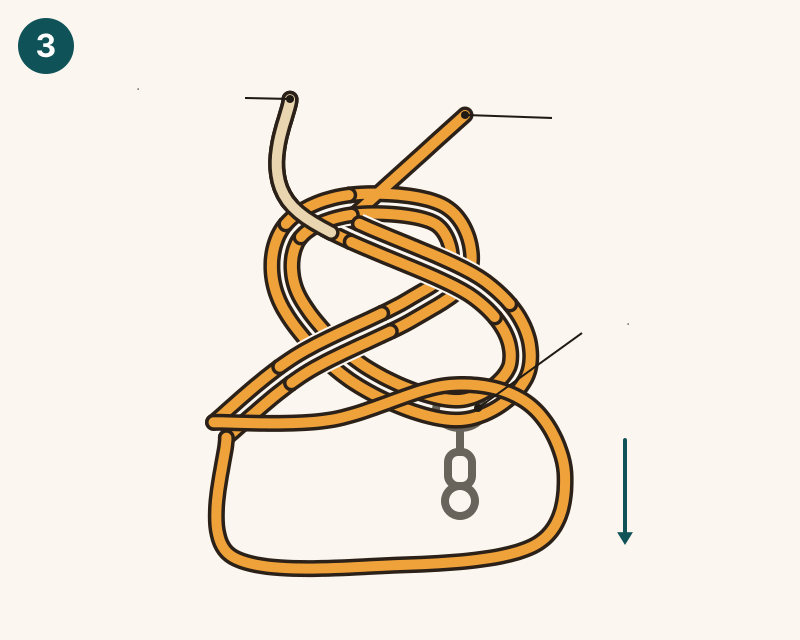
Step 3: Pass the bight over the swivel
Open the free bight and pass it completely over the whole swivel. Move the loop past the swivel and back up to the eye.[1]
-
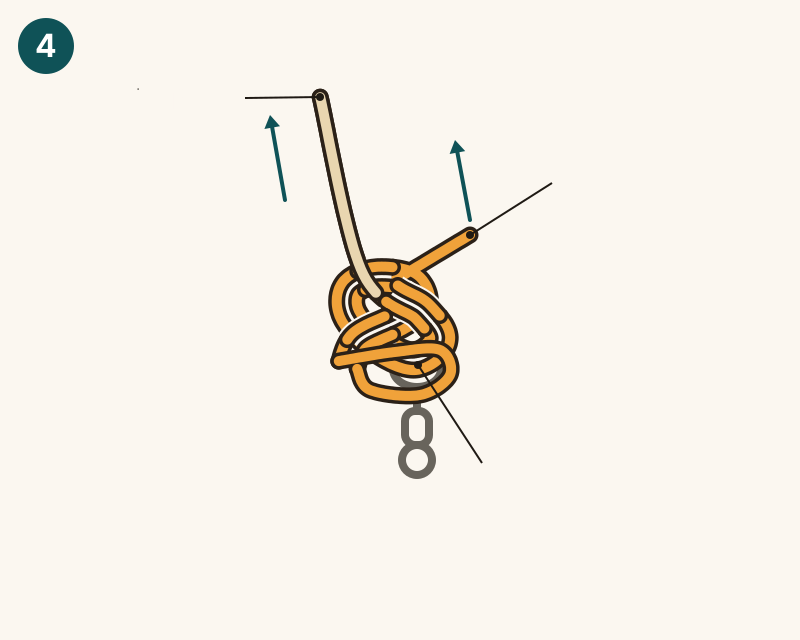
Step 4: Moisten, tighten and trim
Moisten the line. Pull the standing part and tag end while guiding the bight into the knot until it seats snugly on the eye. Check the seating, test the knot and trim the tag.[2]
What the Palomar knot is used for
- Attaching a hook or fly to line or tippet.[1]
Strengths and weaknesses
Tips and common mistakes
Tips
- For a small eye, thread the single end through and back from the opposite side to make the bight.[2]
Common mistakes
Variations
- Single-end threading method — For a small eye, pass the end through once and back again to form the doubled bight.[2]
Related knots
- Improved clinch knot — A monofilament terminal knot.
- Uni knot — An alternative terminal knot.
Frequently asked questions
Does it work with braid?
Animated Knots recommends it for braid.[1]
Why leave a large loop?
The whole hook or lure must pass through it.[1]
What if the doubled line will not fit the eye?
Thread a single end through, then return it through the eye in the opposite direction.[2]
What should I check before trimming?
All parts must cinch together, with the loop drawn above the eye.[2]
Sources
- Palomar Knot — Animated Knots — structure, braid and loop placement
- Palomar Knot — NetKnots — small-eye method and seating
Last reviewed: