How to tie the Trucker’s hitch
The trucker’s hitch combines a rope loop with a pulley-like return and two half hitches to tension a line for loads or tarpaulins.
- Type
- Hitches
- Difficulty
- Moderate
- ABOK number
- #2124
- Best for
- Camping
There is more than one trucker’s hitch. This version uses a slip loop made from the slack side of the rope.[2]
Step-by-step: tying the Trucker’s hitch
-
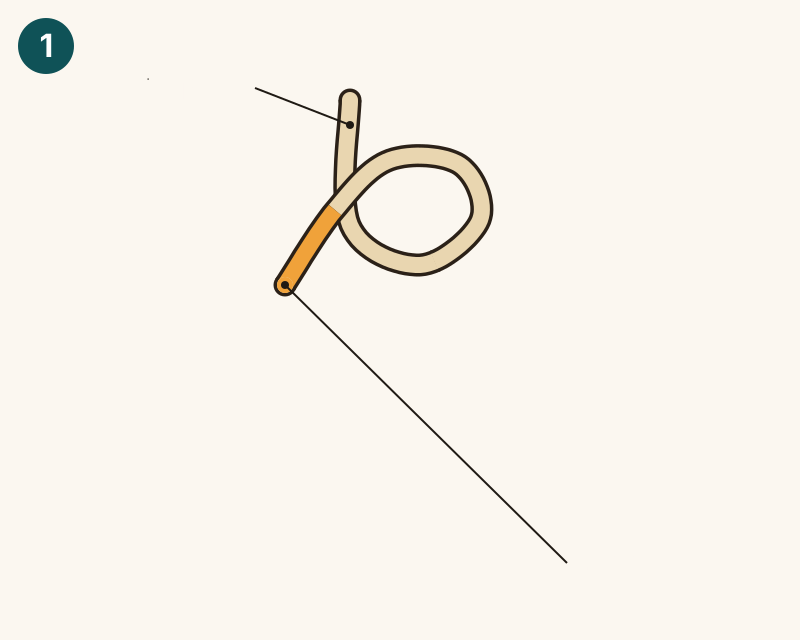
Step 1: Make a crossing loop
Secure the far end of the rope to an anchor. Make a small crossing loop in the span, leaving ample slack toward the second anchor.
-
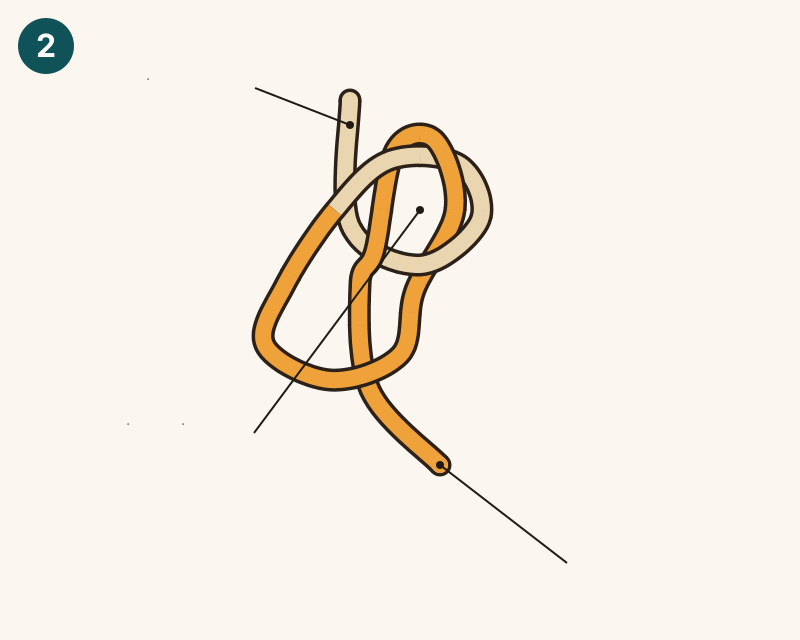
Step 2: Pull a slack-side bight through
Push a bight from the slack side through the crossing loop. Snug the small knot around its base. The eye must stay open when the standing part is pulled.
-
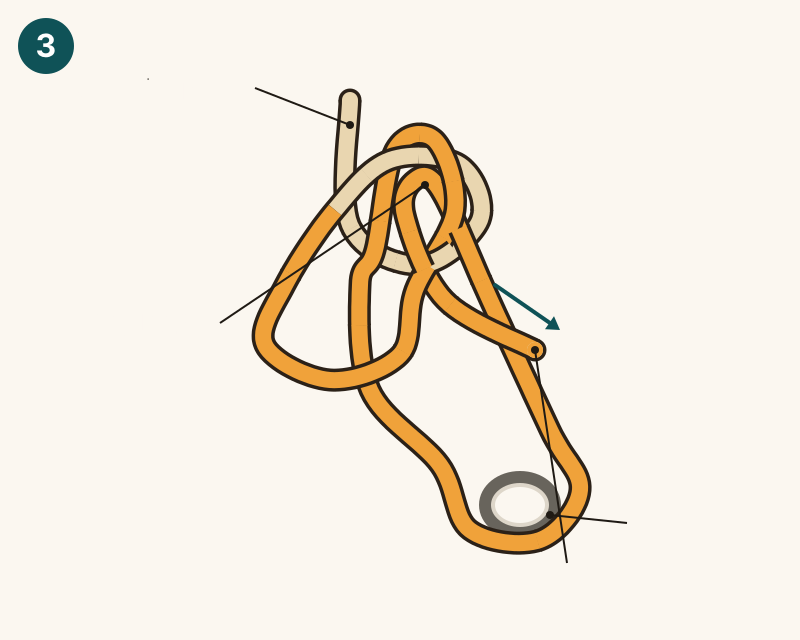
Step 3: Return through the eye
Take the free end around the second anchor and return it through the slack-side bight that forms the pulley loop.
-
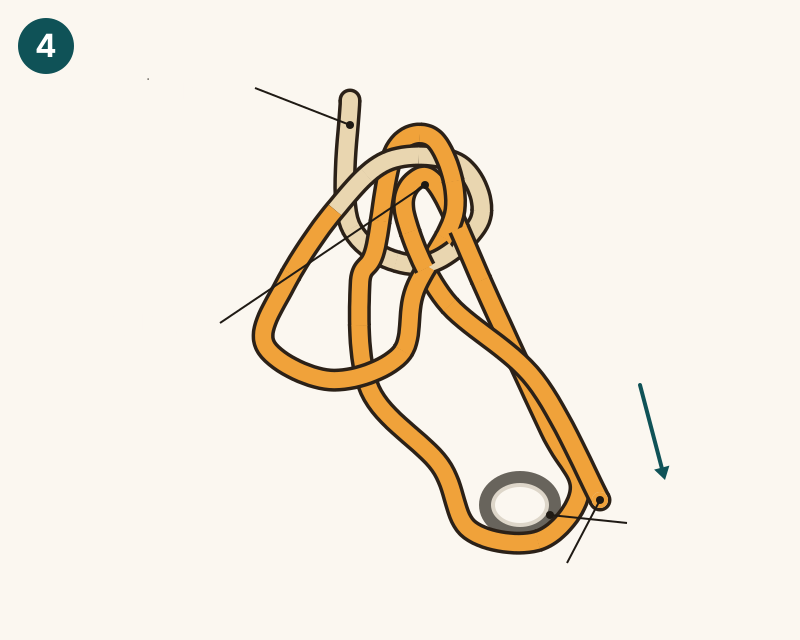
Step 4: Haul and hold
Pull the free end down toward the second anchor to tension the rope. Pinch the line at the pulley loop to hold the tension while finishing.
-
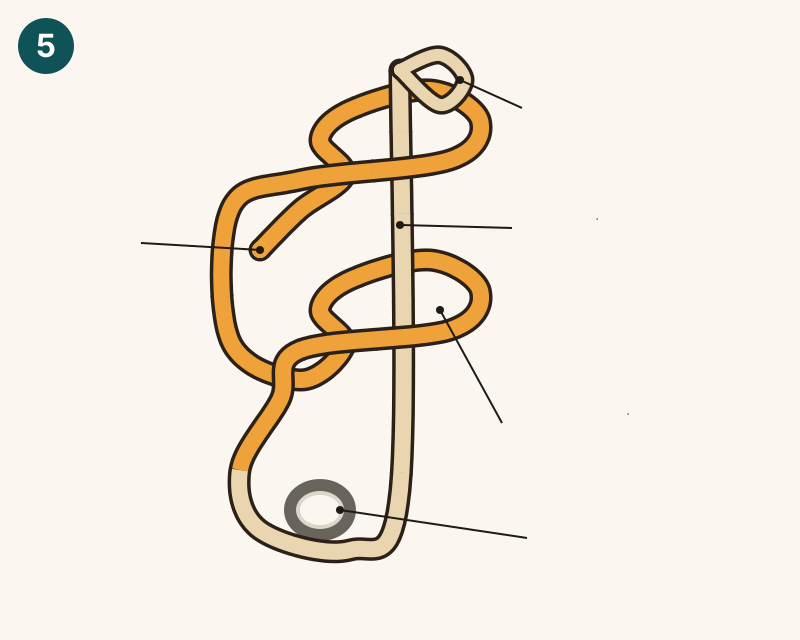
Step 5: Finish with two half hitches
Keep the tension pinched at the pulley loop. Tie two half hitches in the same direction around the returning strand that runs from the anchor up to the pulley loop. Snug both hitches before releasing your grip. This version ties around one strand; both strands are also an option.[2]
What the Trucker’s hitch is used for
- Tensioning a tarpaulin or securing a load.[1]
Strengths and weaknesses
Tips and common mistakes
Tips
- Pinch the return at the eye while tying off.[1]
Common mistakes
- Using the wrong side for the bight. A standing-side bight can close under tension.[2]
Variations
- Directional figure-eight version — Animated Knots uses this eye instead of a slip loop.[1]
Related knots
- Taut-line hitch — An adjustable friction loop.
- Two half hitches — The finishing attachment used here.
Frequently asked questions
Is it a single knot?
It combines an eye, a tensioning return and a finishing hitch.[1]
Can I use another loop?
Yes. Animated Knots lists a directional figure-eight, alpine butterfly and other eyes.[1]
How is it secured?
With two half hitches around the returning strand between the anchor and the pulley loop. They may also be tied around both tensioned strands.[2]
Which side forms the slip loop?
Use a bight from the slack side so the eye does not close when loaded.[2]
Sources
- Trucker’s Hitch — Animated Knots — ABOK, variations, uses and finishing
- Trucker’s Hitch — NetKnots — slip-loop sequence
Last reviewed: